Some posts on CatchUpWithClaire may contain affiliate links. Affiliate links means that sometimes if you click through to a website and register or purchase something I have recommended, I may get a commission from that sale at no extra cost to you. Thank you for your support
Lion’s mane supplements have become increasingly popular among people looking for natural ways to support cognitive function, focus, memory, mood, and overall wellbeing. But does lion’s mane actually work? What are the benefits, how much should you take, and are there any side effects?
Lion’s mane, scientifically known as Hericium erinaceus, is an edible mushroom that has a long history of use in traditional Asian medicine. Today, it is commonly sold as a dietary supplement in capsules, powders, extracts, and mushroom blends.
Scientific research into lion’s mane is promising, particularly in the areas of cognition and neurological health, but it is still developing. Human studies have produced some encouraging findings, while other research has found limited or mixed effects. A recent systematic review identified several clinical studies investigating lion’s mane and cognitive function but concluded that more research is needed to establish its effectiveness and safety profile.
In this guide, we’ll answer the most commonly asked questions about lion’s mane supplements.
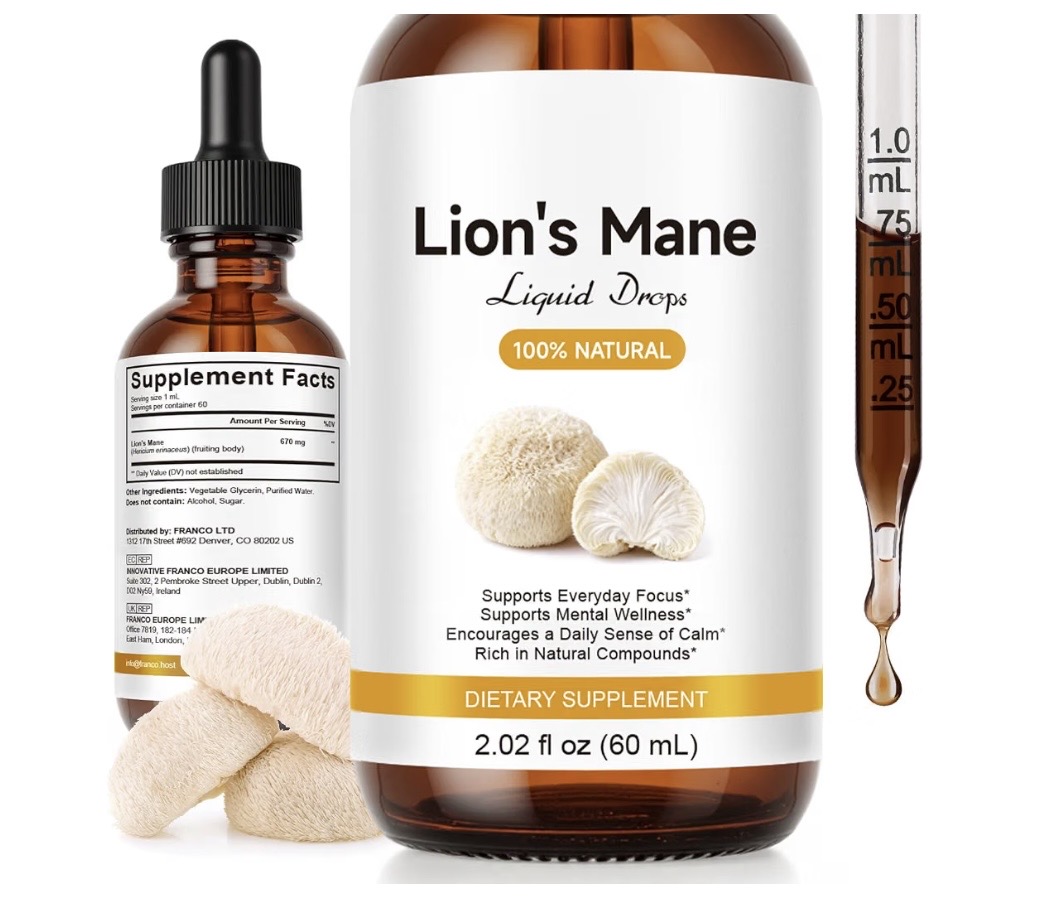
What Is Lion’s Mane?
Lion’s mane is a distinctive white mushroom with long, cascading spines that resemble a lion’s mane. Its scientific name is Hericium erinaceus, and it is also known by names such as yamabushitake and bearded tooth mushroom.
Unlike many medicinal mushrooms, lion’s mane is also edible and can be used as a food. It contains a variety of bioactive compounds, including polysaccharides and compounds known as hericenones and erinacines.
Researchers have become particularly interested in these compounds because laboratory studies suggest they may influence biological pathways involved in nerve growth and brain health. However, results observed in laboratory or animal studies do not necessarily mean the same effects occur in humans.
This distinction is important when evaluating claims made about lion’s mane supplements.
What Are Lion’s Mane Supplements?
Lion’s mane supplements are concentrated products made from the mushroom or extracts of it.
They are commonly available as:
- Capsules
- Tablets
- Powders
- Liquid extracts
- Tinctures
- Mushroom coffee
- Multi-mushroom blends
Different supplements can contain very different forms and concentrations of lion’s mane. Some use powdered mushroom, while others use extracts designed to concentrate particular compounds.
This means that two products labelled “lion’s mane” may not necessarily be equivalent.
It is also worth remembering that dietary supplements are not evaluated in exactly the same way as medicines. Supplement products purchased commercially may differ from products used in scientific studies, and label claims do not automatically demonstrate effectiveness.

What Are the Potential Benefits of Lion’s Mane?
The most commonly discussed lion’s mane benefits involve the brain and nervous system.
1. May Support Cognitive Function
Cognitive support is one of the main reasons people take lion’s mane supplements.
Some human research suggests that lion’s mane may have potential benefits for aspects of cognitive function. For example, an earlier randomized controlled trial involving adults with mild cognitive impairment found improvements in cognitive scores during 16 weeks of supplementation compared with placebo.
Another randomized, double-blind study investigated lion’s mane supplementation for 12 weeks and reported an improvement in one measure of cognitive function.
However, the evidence is not conclusive. Human studies have generally been relatively small, and researchers continue to investigate whether the effects are meaningful and consistent.
2. May Support Memory
Because of its potential effects on cognitive function, lion’s mane is often marketed as a natural memory supplement.
Some studies have reported improvements in measures of cognition, but it is too early to say that lion’s mane reliably improves memory in everyone.
A review of human research into mushrooms and neurocognitive health found that intervention studies have produced mixed results, although some studies involving lion’s mane showed potential improvements in cognitive and mood-related measures.
Therefore, lion’s mane may be worth researching if you’re interested in nutritional approaches to cognitive health, but it should not be considered a guaranteed memory enhancer.
3. May Support Focus and Mental Performance
Another popular reason for taking lion’s mane is to support concentration and mental performance.
Interestingly, a small placebo-controlled pilot study involving 41 healthy adults found that participants performed faster on a Stroop task 60 minutes after taking lion’s mane. The study also observed a trend toward reduced subjective stress after 28 days of supplementation. However, the researchers emphasized that the findings were preliminary and that larger studies are needed.
More recent research has also produced mixed results. An acute study of healthy young adults did not find a significant overall improvement in global cognitive function or mood after a single dose, although one individual test showed improved performance.
In other words, lion’s mane may support certain aspects of mental performance, but the evidence does not currently justify promising dramatic improvements in focus or productivity.
4. May Have Antioxidant and Anti-Inflammatory Properties
Lion’s mane contains bioactive compounds that have demonstrated antioxidant and anti-inflammatory activity in laboratory research.
These properties have contributed to interest in lion’s mane for general health and cellular protection.
However, laboratory findings should not automatically be interpreted as proof that taking a lion’s mane supplement prevents inflammation-related diseases or provides a specific clinical benefit in humans.
More human research is needed.
5. May Support Mood and Stress
Mood is another area researchers are investigating.
Some studies have reported potential effects on mood, anxiety-related symptoms, or stress. However, the evidence remains preliminary.
The small study involving healthy young adults mentioned above found a trend toward lower subjective stress after 28 days, but it did not provide definitive evidence that lion’s mane treats stress or anxiety.
A review of mushroom research also concluded that human intervention studies have produced mixed results and that additional well-designed trials are required.
For this reason, lion’s mane should not be viewed as a replacement for professional treatment for depression, anxiety, or other mental health conditions.

Does Lion’s Mane Increase Brain Growth or Nerve Growth?
One of the most interesting areas of lion’s mane research involves nerve growth.
Certain compounds found in lion’s mane, particularly hericenones and erinacines, have attracted scientific interest because of their potential relationship with nerve growth factor and neurological processes.
Laboratory and preclinical research has produced intriguing findings, and these mechanisms are one reason researchers are studying lion’s mane for brain and nervous-system health.
However, saying that lion’s mane “regrows brain cells” or “repairs damaged nerves” goes beyond what current human evidence demonstrates.
This is an important distinction between promising scientific mechanisms and proven health outcomes.
How Much Lion’s Mane Should You Take?
There is no universally established lion’s mane dosage that has been proven to be optimal for everyone.
Studies have used different preparations, doses, extraction methods, and durations. For example, one pilot study in healthy adults used 1.8 grams of lion’s mane daily for 28 days, while other research has used different preparations and amounts.
Consequently, it is not appropriate to assume that one dosage works for every lion’s mane product.
If you decide to take lion’s mane, follow the manufacturer’s directions and avoid assuming that a larger dose will necessarily provide greater benefits.
The concentration of an extract can also vary considerably between products, making comparisons based purely on the number of milligrams misleading.
When Is the Best Time to Take Lion’s Mane?
There is no scientifically established “best time” to take lion’s mane.
Some people prefer taking it in the morning because they are interested in cognitive performance and focus. Others take it with breakfast or another meal.
If lion’s mane causes stomach discomfort when taken on an empty stomach, taking it with food may be more comfortable.
Consistency may be more practical than focusing on a specific time of day.
How Long Does Lion’s Mane Take to Work?
The answer depends on what you are expecting from the supplement.
Some people report noticing subjective changes in focus or mental clarity relatively quickly, but individual experiences are not proof of effectiveness.
Research has investigated both acute and longer-term supplementation. One study found a change in performance on a specific cognitive task 60 minutes after a dose, while longer studies have examined supplementation over several weeks.
At present, there is not enough evidence to establish a precise timeframe in which everyone should expect to notice benefits.

What Are the Side Effects of Lion’s Mane?
Lion’s mane is generally considered an edible mushroom, but that does not mean supplements are completely risk-free.
Reported or potential side effects can include:
- Stomach discomfort
- Digestive upset
- Headache
- Allergic reactions
A recent systematic review identified stomach discomfort, headache, and allergic reactions among potential side effects reported in the literature.
Anyone experiencing an allergic reaction should stop using the product and seek appropriate medical attention.
It is also important to remember that supplement safety can depend on the specific product, its ingredients, dosage, manufacturing quality, and the individual taking it.
Can You Take Lion’s Mane Every Day?
Lion’s mane has been studied in daily supplementation protocols lasting several weeks or longer.
However, long-term safety data remain more limited than data available for many conventional foods and medicines.
If you are considering taking lion’s mane daily for an extended period, particularly if you take prescription medicines or have an existing medical condition, it is sensible to discuss it with a healthcare professional.
Can Lion’s Mane Interact With Medication?
This is an important question that is sometimes overlooked.
Dietary supplements can interact with medicines, and the safety of a supplement can depend on an individual’s health conditions and medications.
Because research on lion’s mane interactions is still limited, people taking prescription medicines should not assume that a mushroom supplement is automatically safe simply because it is natural.
Speak with your doctor or pharmacist before starting lion’s mane if you regularly take medication, particularly if you have a chronic medical condition.
Is Lion’s Mane Safe During Pregnancy or Breastfeeding?
There is not enough reliable evidence to establish the safety of lion’s mane supplements during pregnancy or breastfeeding.
Many dietary supplements have not been adequately studied in pregnant or breastfeeding people.
For that reason, it is best to consult a qualified healthcare professional before using lion’s mane supplements during pregnancy or breastfeeding.
Can Children Take Lion’s Mane?
Lion’s mane supplements are not well studied in children.
Because children can respond differently to supplements and because safety data are limited, parents and caregivers should speak with a pediatrician or other qualified healthcare professional before giving a child a lion’s mane supplement.
What Is the Difference Between Lion’s Mane Powder and Extract?
This is one of the most important things to understand when comparing products.
Lion’s mane powder is generally made by drying and grinding the mushroom.
Lion’s mane extract is processed to concentrate certain components of the mushroom. Extracts can be produced using different extraction methods, meaning that two extracts can also differ substantially.
When comparing supplements, look beyond the headline milligram amount. Consider the mushroom source, whether the product contains fruiting body or mycelium, extraction method, standardization information, and independent testing.
Fruiting Body vs Mycelium: Which Is Better?
This is a controversial topic in the mushroom supplement industry.
Fruiting body products come from the visible mushroom structure, while mycelium consists of the network of fungal filaments that grows through its substrate.
Both can contain bioactive compounds, and research has investigated different parts of the mushroom.
Rather than assuming that one form is automatically superior, consumers should examine the specific product’s testing, ingredient transparency, extraction process, and evidence supporting its formulation.
How Do You Choose a Good Lion’s Mane Supplement?
If you’re shopping for a lion’s mane supplement, consider the following:
1. Check the ingredient label
Look for a clearly stated amount of lion’s mane and information about the form used.
2. Look for transparency
A reputable manufacturer should provide clear information about ingredients and manufacturing practices.
3. Consider independent testing
Third-party testing can provide additional information about identity, purity, and contamination.
4. Be cautious about exaggerated claims
Be skeptical of products claiming that lion’s mane can “cure dementia,” “reverse Alzheimer’s disease,” “regrow your brain,” or guarantee dramatic cognitive improvements.
Current human evidence does not support such definitive claims.
5. Don’t judge quality by dosage alone
A higher number of milligrams does not automatically mean a better supplement. Different extracts can have very different concentrations and compositions.
Can Lion’s Mane Prevent Dementia or Alzheimer’s Disease?
There is currently insufficient evidence to say that lion’s mane prevents dementia or Alzheimer’s disease.
Some studies have investigated lion’s mane in people with cognitive impairment, and the results are scientifically interesting. However, these studies are not sufficient to establish lion’s mane as a proven dementia-prevention strategy.
People experiencing memory loss or cognitive changes should seek medical evaluation rather than relying on a supplement.
Can Lion’s Mane Treat Anxiety or Depression?
Lion’s mane is sometimes marketed as a natural treatment for anxiety and depression.
Although some research has investigated mood-related outcomes, the evidence is still preliminary and mixed.
Lion’s mane should therefore not replace established treatments for depression, anxiety, or other mental health conditions.
If you are experiencing persistent changes in mood, anxiety, sleep, or mental wellbeing, speak with an appropriate healthcare professional.
Does Lion’s Mane Help With Sleep?
Sleep is another frequently searched lion’s mane benefit, but evidence specifically demonstrating that lion’s mane reliably improves sleep in humans is limited.
Some research has investigated broader mood and neurological outcomes, but this should not be interpreted as proof that lion’s mane is an effective sleep aid.
If sleep problems are persistent, identifying the underlying cause is generally more useful than relying solely on a supplement.
Can Lion’s Mane Improve Gut Health?
Research into lion’s mane and gut health is an emerging area.
A recent systematic review discussed findings involving gut microbiota and short-chain-fatty-acid-producing bacteria. However, much of the evidence remains preliminary, and more human research is required before firm conclusions can be made about specific gut-health benefits.
Is Lion’s Mane Better Than Coffee for Focus?
Not necessarily.
Coffee and lion’s mane work very differently, and there is currently insufficient evidence to say that lion’s mane is a superior alternative to caffeine for focus or alertness.
Some people choose lion’s mane because they are interested in mushroom supplements without relying on stimulants. However, lion’s mane should not be expected to produce the same immediate stimulating effect as caffeine.
Can You Take Lion’s Mane With Coffee?
Lion’s mane and coffee are commonly combined in products such as mushroom coffee.
There is no established evidence that combining the two automatically produces superior cognitive benefits. If you tolerate both ingredients individually, a combination product may be convenient, but pay attention to the actual amount of lion’s mane and caffeine it contains.
Is Lion’s Mane Worth Taking?
For healthy adults interested in experimenting with a mushroom supplement, lion’s mane is an interesting option with some promising—but still developing—human research.
The strongest reason for interest is its potential relationship with cognitive function and neurological health. However, the current evidence does not support treating lion’s mane as a miracle supplement or guaranteed brain booster.
Human studies have generally been relatively small, and different trials have used different preparations and doses. Recent research continues to produce mixed results, highlighting the need for larger, better-designed clinical trials.
Frequently Asked Questions About Lion’s Mane Supplements
Is lion’s mane a nootropic?
Lion’s mane is often marketed as a natural nootropic because of its potential effects on cognition. However, evidence for meaningful cognitive enhancement in healthy people remains limited.
Does lion’s mane give you energy?
Lion’s mane is not a stimulant in the same way as caffeine. Some users report feeling more mentally alert, but there is insufficient evidence to conclude that it reliably increases physical or mental energy.
Does lion’s mane contain caffeine?
No. Pure lion’s mane mushroom does not naturally contain caffeine.
Can you take lion’s mane on an empty stomach?
Many people can, but others may experience digestive discomfort. If you notice stomach upset, taking it with food may be more comfortable.
Is lion’s mane addictive?
There is currently no evidence that lion’s mane is addictive in the way substances such as nicotine or certain drugs can be.
Does lion’s mane make you sleepy?
There is no strong evidence that lion’s mane consistently causes sleepiness. Individual responses can vary.
Can you take lion’s mane long term?
Long-term safety research is more limited than short-term research. Anyone considering prolonged daily use should discuss it with a healthcare professional, particularly if they take medication.
What is the best lion’s mane supplement?
There is no single product that is objectively best for everyone. Look for transparent labeling, appropriate testing, clear ingredient information, and realistic health claims.
The Bottom Line
Lion’s mane supplements are an increasingly popular way to consume Hericium erinaceus, particularly among people interested in cognitive health, memory, focus, mood, and general wellbeing.
Research has identified several potentially interesting biological effects, and some human studies have reported improvements in particular measures of cognition. However, the overall evidence remains limited and mixed, meaning more high-quality clinical research is needed before strong conclusions can be drawn.
Lion’s mane should therefore be viewed as a promising area of nutritional research rather than a proven treatment or miracle brain supplement.
If you choose to use a lion’s mane supplement, pay attention to product quality, follow the manufacturer’s recommended serving, and be cautious about products making dramatic medical claims. If you’re pregnant, breastfeeding, taking medication, preparing for surgery, or managing a medical condition, speak with a healthcare professional before adding a supplement to your routine. Dietary supplements can have risks and interactions, and “natural” does not necessarily mean “risk-free.”
Ultimately, lion’s mane is best considered alongside—not instead of—the fundamentals of brain and overall health: a balanced diet, regular physical activity, sufficient sleep, stress management, and appropriate medical care.
